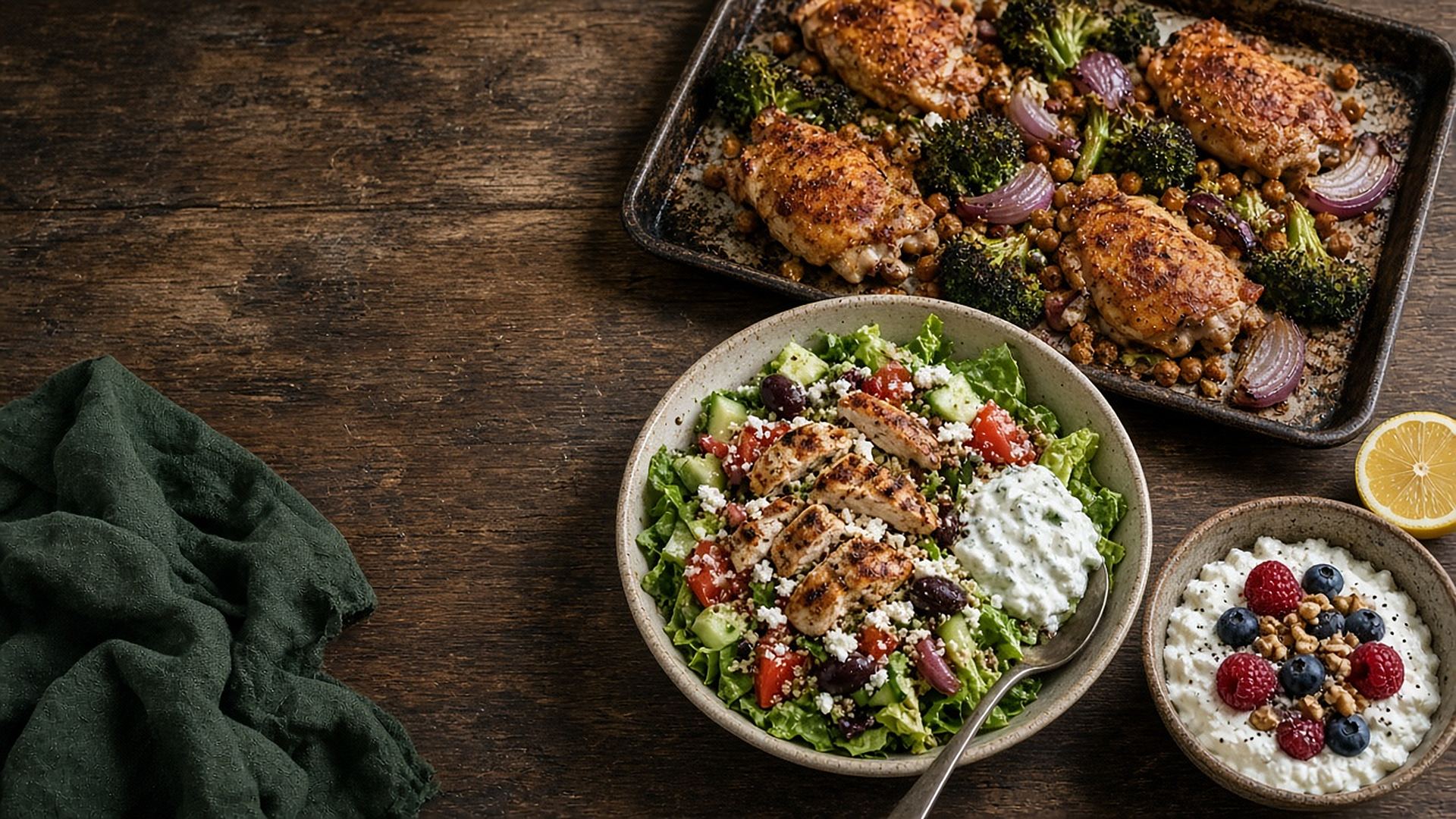
Paprika chicken traybake, a Greek chicken bowl and a berry cottage cheese bowl on a rustic wooden table
A 4-week meal plan for women 40+

Reach your protein without a single scoop of powder.

The Powder-Free Protein Plan: 30 original high-protein, lower-carb recipes, four weekly plans and grocery lists. About 120 g of protein a day from real food, with every macro checked against USDA data.

  • 45-page PDF
  • Metric + US measures
  • Instant digital download

Plus: use the Cookverter kitchen toolkit for free.

Cover of The Powder-Free Protein Plan
$17PDF
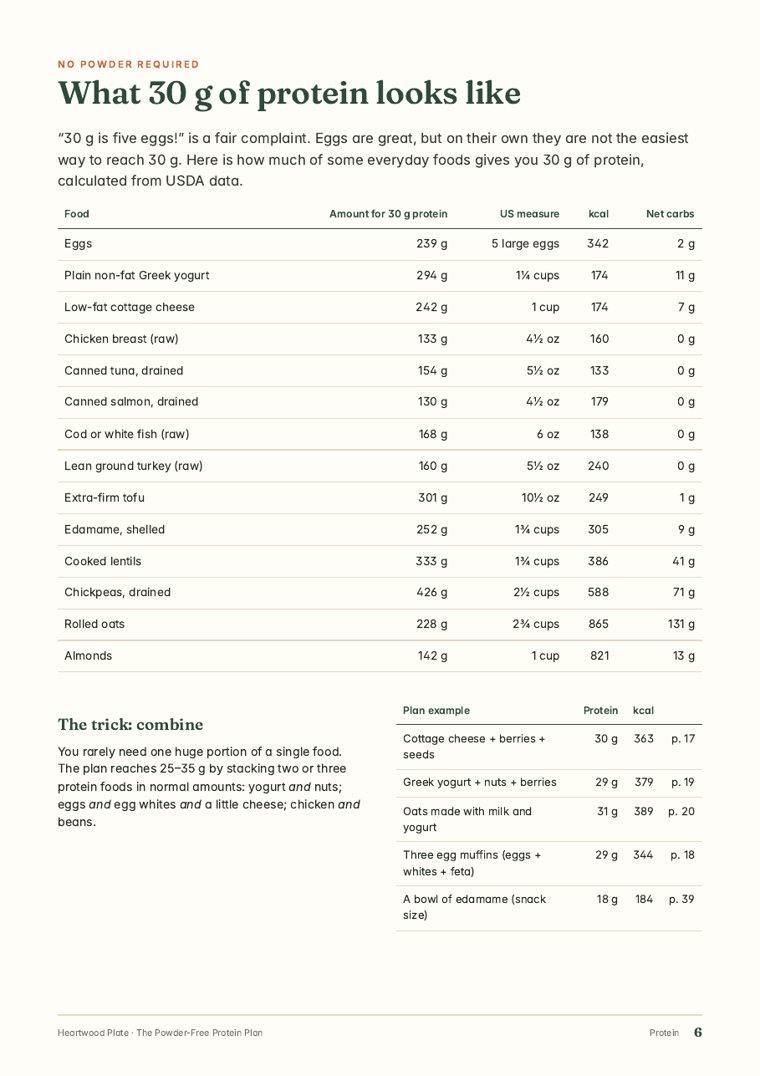
“30 grams of protein? That’s five eggs.”A complaint we hear a lot, and a fair one.

Expert groups suggest roughly 25–30 g of protein at each main meal as we get older, and Australian research published in 2026 found most women aged 40–55 fall well short. The usual fix is a protein shake. Plenty of us don’t want one.

This plan gets there with food: yogurt and nuts, eggs and a little feta, chicken and beans. Normal portions, stacked well.

Why it’s different

Built for real kitchens, with numbers you can check

1

No powders, no shakes

Every breakfast, lunch and dinner lands around 25–35 g of protein from everyday foods. Nothing to mix, nothing too sweet.

2

Lower carb, high fiber

About 94 g net carbs and 40 g fiber a day on average, from beans, lentils, oats, berries and vegetables. Not keto, and not trying to be.

3

Macros checked, not guessed

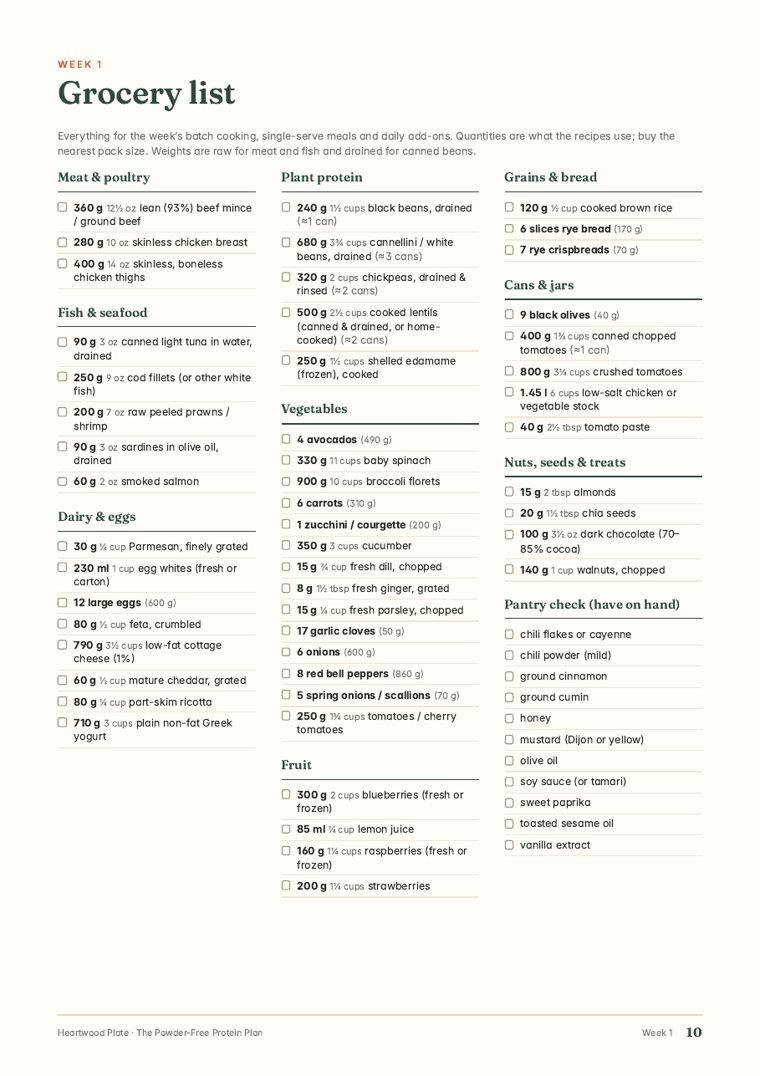
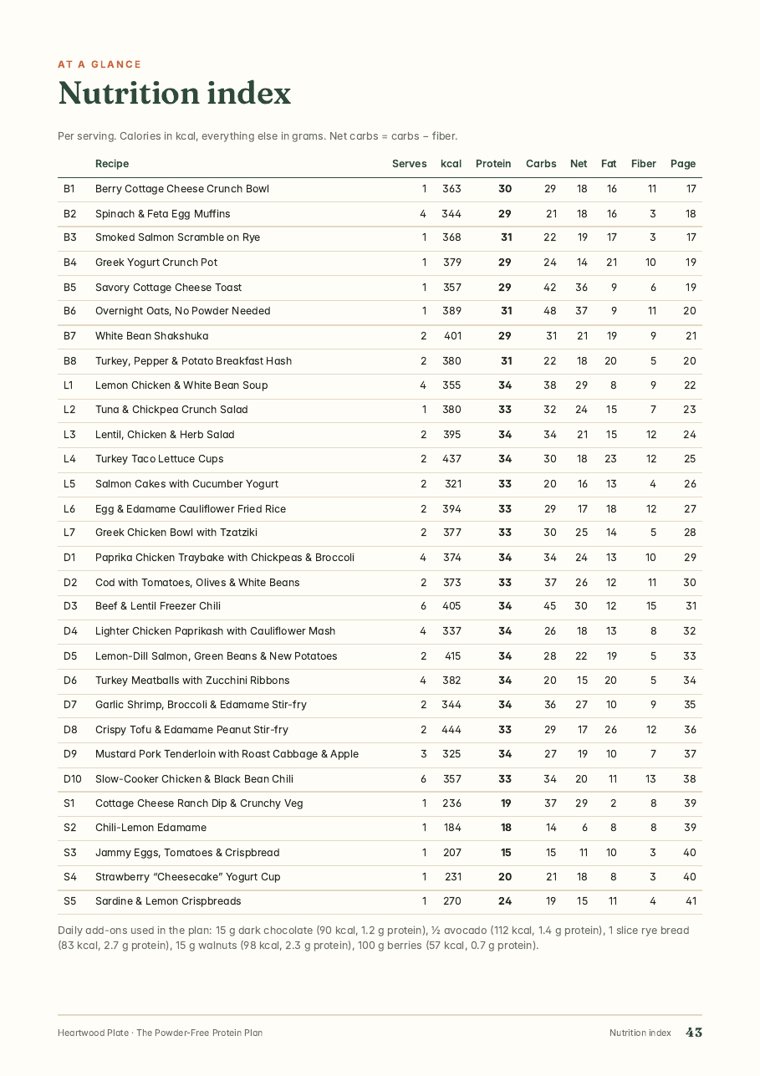
All 88 ingredients are matched to USDA FoodData Central entries and added up by script. Every ID is printed in the book.

4

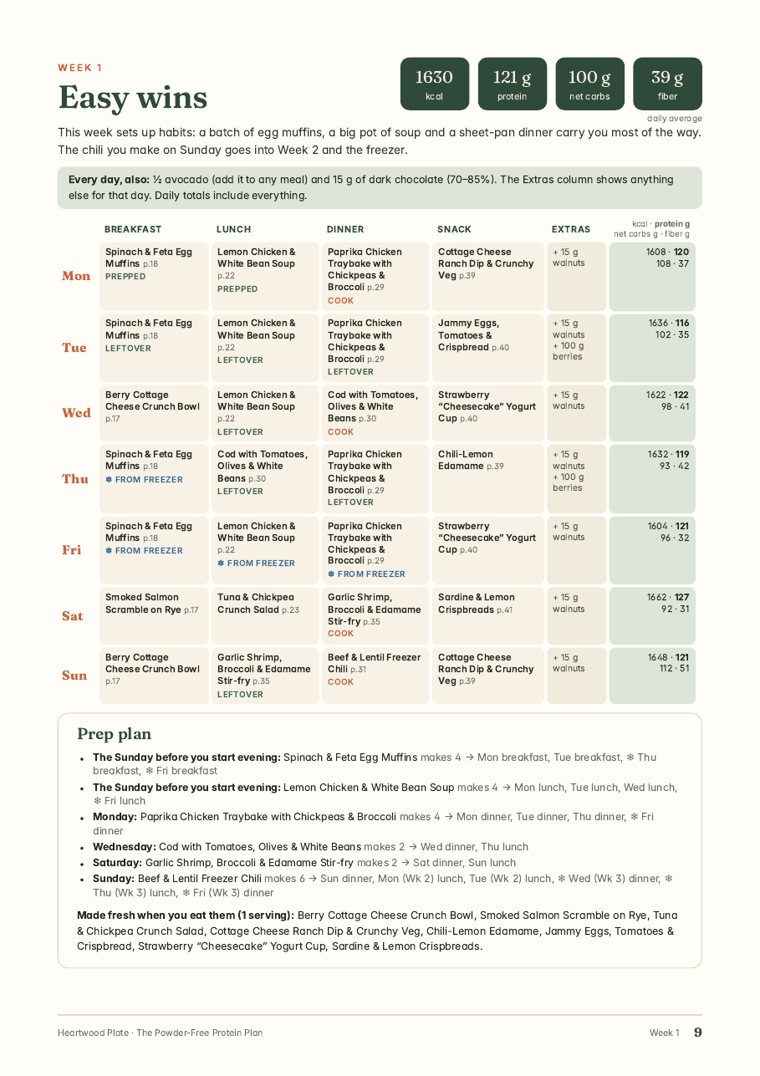
Cook 3–4 times a week

Batch recipes, leftovers planned in, freezer portions marked, and two slow-cooker friendly dinners.

5

Meals the family eats

Chili, sheet-pan chicken, meatballs, stir-fries, a lighter paprikash. Others can add rice or bread to their own plates.

6

Metric and US

Grams with cups, spoons and ounces alongside. Oven temperatures in °C, °F and fan.

It’s for you if…

  • You’re 40+ and want more protein without living on shakes
  • You want a plan that tells you what to cook and buy each week
  • You like real, familiar food and cooking a few times a week
  • You want to know where the numbers come from
  • You prefer moderate carbs over strict keto

It’s not for you if…

  • You need a plan for a medical condition (ask your doctor or a dietitian)
  • You’ve been told to limit protein, for example for kidney disease
  • You want a fully vegan plan
  • You want a strict keto plan under 25 g of carbs a day
  • You want a physical book
What’s inside

45 pages, 4 weeks, 30 recipes

1,644kcal a day, on average
120 gprotein a day
94 gnet carbs a day
40 gfiber a day
Free bonus

Cookverter kitchen toolkit. Cooking in cups or ounces? Use our free online converters for volume, weight, oven temperature and cups to grams by ingredient, plus a recipe scaler, baker’s percentages and a roasting time calculator, at cookverter.com.

Get the plan · $17

Try a recipe free

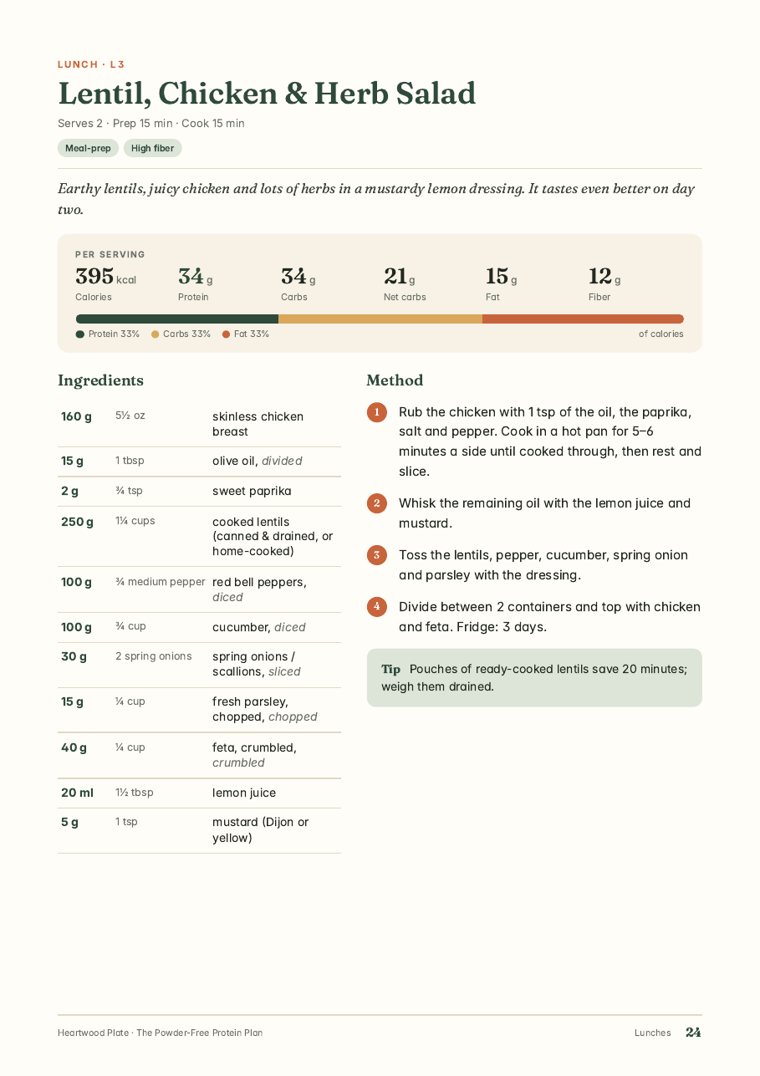
Berry Cottage Cheese Crunch Bowl

The breakfast that quietly does the heavy lifting: creamy, tangy, and about 30 g of protein before you have even boiled the kettle.

Serves 1 · 5 minutes · no cooking

363kcal
30 gprotein
11 gfiber
29 gcarbs
18 gnet carbs
16 gfat

Ingredients

  • 200 g (1 cup) low-fat cottage cheese (1%)
  • 80 g (¾ cup) raspberries (fresh or frozen)
  • 50 g (¼ cup) blueberries (fresh or frozen)
  • 15 g (2 tbsp) walnuts, chopped, roughly chopped
  • 10 g (2½ tsp) chia seeds
  • 1 g (½ tsp) ground cinnamon, a pinch

Method

  1. Spoon the cottage cheese into a bowl. If you dislike the curds, blitz it for 20 seconds with a stick blender first: it turns silky, like a thick cream.
  2. Top with the berries (frozen berries are fine; let them thaw for 10 minutes or microwave for 30 seconds).
  3. Scatter over the walnuts, chia seeds and cinnamon. Eat straight away, or pack it in a jar with the walnuts in a separate pot.

Tip: Not a cottage-cheese person yet? Start with half cottage cheese, half Greek yogurt and shift the ratio over a fortnight.

Nutrition per serving, calculated from USDA FoodData Central values. Brands vary.

How we check the numbers

No guessed macros

Most meal plans don’t say where their nutrition numbers come from. Ours do.

  1. Each ingredient is matched to one entry in USDA FoodData Central, the US government’s public food database.
  2. A script multiplies each ingredient by its weight, totals each recipe and divides by servings.
  3. Before every build, the stored values are re-checked against the USDA file. If anything differs, the build stops.
  4. Every ingredient’s FDC ID is printed in the back of the book so you can look it up yourself.
Start this week

The Powder-Free Protein Plan

Four weeks of high-protein, lower-carb meals for women 40+. No powders, no shakes, no guesswork.

$17USD · one-time
  • 45-page PDF to read on any device or print
  • 30 original recipes with full nutrition
  • 4 weekly plans, prep plans and grocery lists
  • Metric and US measures
  • Swaps for vegetarian, dairy-free, fish-free and gluten-free
  • Free bonus: the Cookverter kitchen toolkit (cookverter.com)
Buy now · $17

Secure checkout with Stripe. Digital download: nothing is shipped.

Questions

Frequently asked

Do I need protein powder or shakes?

No. That is the whole point. Every meal reaches its protein from ordinary foods: Greek yogurt, cottage cheese, eggs, fish, chicken, beans, lentils and tofu.

Is this keto?

No. It is lower carb, not no carb. Days average about 94 g of net carbs, mostly from beans, lentils, oats, fruit and vegetables, which also bring about 40 g of fiber a day.

How many calories is it?

Days run about 1604–1690 kcal with about 120 g of protein. The guide shows simple ways to add or remove 100–150 kcal so it fits you.

How were the macros calculated?

Each of the 88 ingredients is matched to a specific USDA FoodData Central entry, and a script adds them up per recipe and per day. The ID for every ingredient is printed in the book so you can check it yourself. Figures are estimates: brands vary.

Can I make it vegetarian or dairy-free?

Partly. Several recipes are already vegetarian, and a full swaps page covers vegetarian, dairy-free, fish-free and gluten-free options. It is not a fully vegan plan.

Will my family eat it?

The dinners are familiar on purpose: chili, sheet-pan chicken, meatballs, stir-fries, a lighter paprikash. Others can add rice, pasta or bread to their own plates.

Is it metric or US?

Both. Every ingredient is in grams or ml with a US cup, spoon, ounce or count alongside, and oven temperatures are in °C, °F and fan.

I take medication or have a health condition. Is this right for me?

Please ask your doctor first. This plan is general information, not medical advice, and is not designed for any medical condition. That matters especially for kidney disease, diabetes, pregnancy or any prescribed diet.

What do I get, and how?

A 45-page PDF you can read on a phone, tablet or computer, or print. It is a digital download; nothing is shipped.